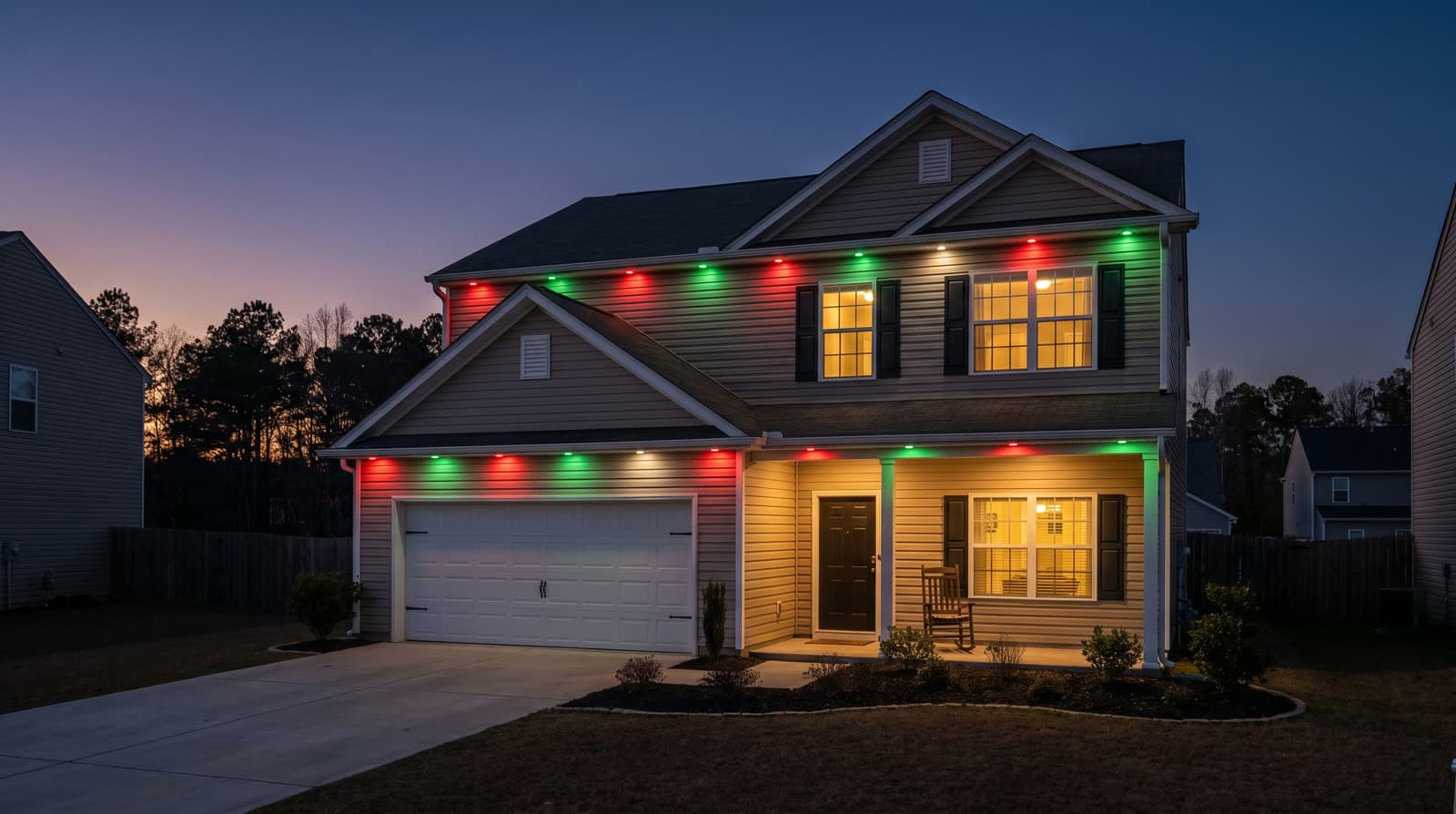
The Holiday Lighting Booking Calendar: Why September Is Already Late
Booking before the November peak is the difference between picking your install date and taking whatever's left.
Search interest in Christmas and holiday light installation climbs steadily from September, peaks in November, and falls off fast after mid-December. Booking before the November peak is the difference between picking your install date and taking whatever's left.
Search interest, month by month.
Based on search interest data for holiday and Christmas light installation terms, the pattern is consistent year to year: interest sits low through most of the year, starts climbing in September, keeps building through October, peaks hard in November, and tapers through December as the season winds down. That curve is a proxy for when homeowners start actually thinking about getting lights installed — and installers’ calendars fill up roughly along the same curve.
- January – August
Baseline interest — most homeowners aren't thinking about holiday lighting yet.
- September
Search interest for holiday and Christmas light installation starts climbing noticeably.
- October
Interest keeps rising as homeowners start planning ahead of the season.
- November
The clear peak — search interest for holiday light installation is at its highest of the year.
- December
Interest is still elevated but starting to fall off as the season progresses; installers' calendars are the tightest here.
The calendar fills from the top down.
“Late” doesn’t mean lights won’t go up — it means the choice of date narrows. Early September bookings get first pick of the open install dates. By the time search interest peaks in November, the homeowners who searched in September have already claimed the earliest dates, and what’s left is whatever’s still open on the calendar. Waiting until interest peaks means competing with everyone else who waited, for a shrinking number of open dates before December events and gatherings.
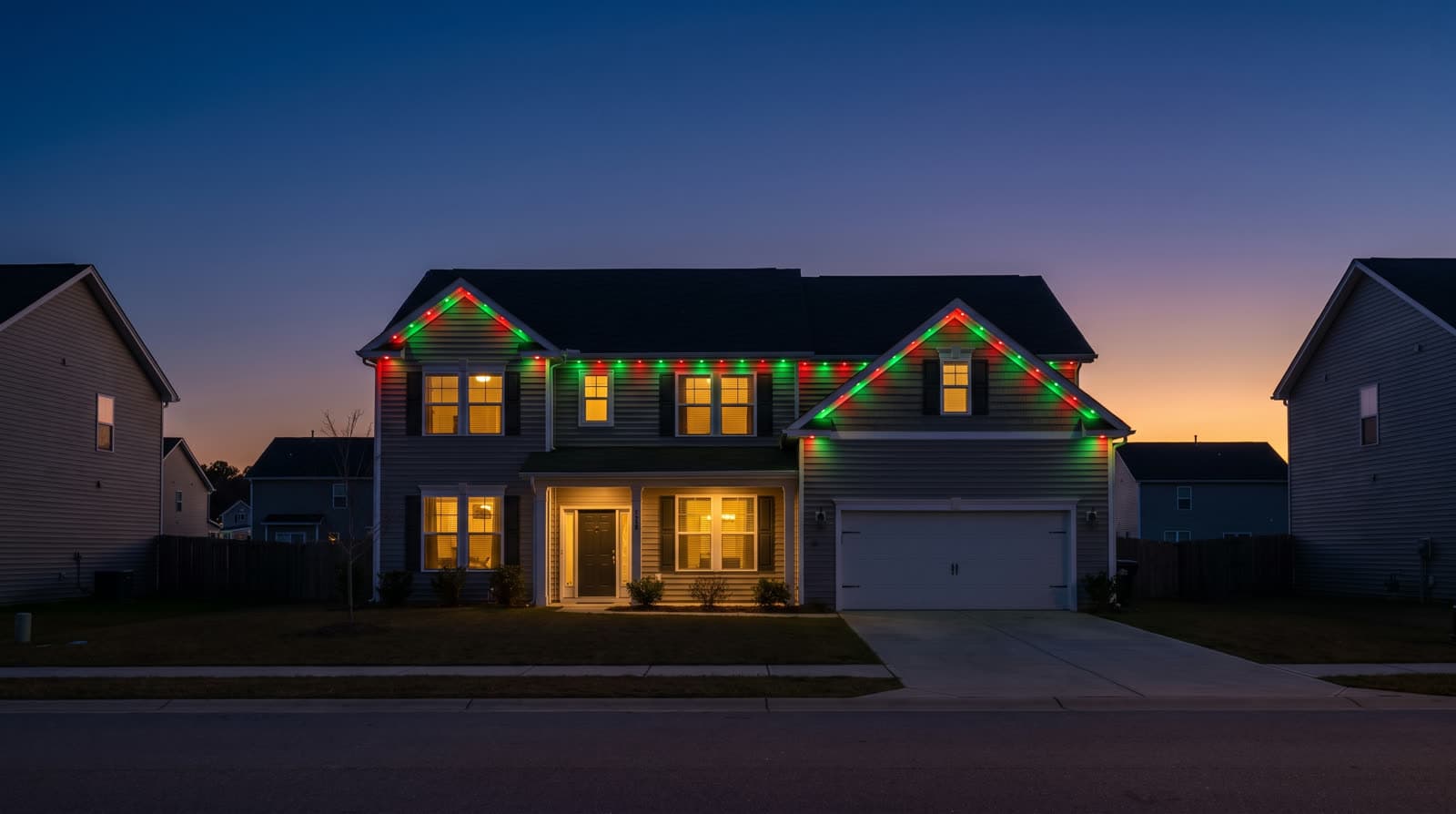
Book on the way up.
- Booking in September gets the widest choice of install dates and the most flexible scheduling.
- Booking in October still has good availability, but the earliest dates tend to be gone.
- Booking in November means working around whatever’s left on the calendar — installers are at their busiest exactly when search interest peaks.
- December bookings are possible but tight, and takedown/storage scheduling for the following January starts to overlap with new installs.
Skip the calendar entirely, going forward.
The booking-calendar problem is specific to seasonal installs — it exists because the hardware goes up and comes down every year on a shared calendar with every other homeowner in the region. A permanent LED lighting install is a one-time project outside that seasonal crunch; once it’s up, switching to a holiday scene for the season takes an app, not a calendar slot. See the permanent vs. seasonal comparison for the full structural tradeoff.
Search interest, stated honestly.
We cite search-interest data because it is available and honest to reference; it is a proxy for when buyers start looking, not a specific installer’s calendar filling up.
Evenings and weekends go first — takedown fills up too.
Within any given month, the most requested slots are weekend dates and evening windows, since those fit best around a typical work schedule — those fill before weekday-only availability does. The same crunch happens in reverse after the season: takedown and off-season storage requests cluster in January, often overlapping with the next round of estimate-visit requests for the following year. Booking takedown at the same time as your original install is the simplest way to avoid a second scheduling scramble.
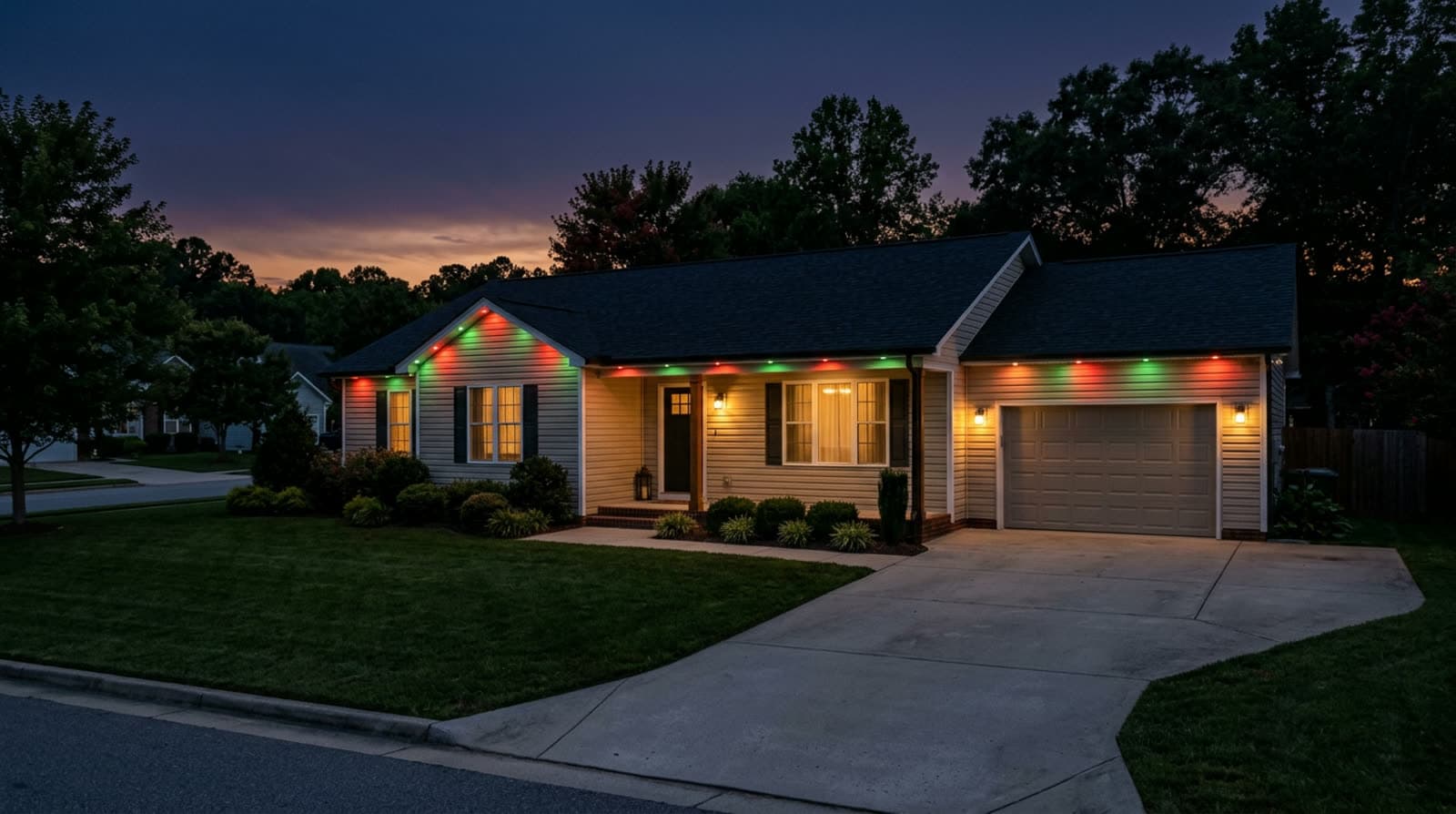
December isn’t a lost cause — it’s a narrower one.
If you’re reading this in December, an install still might be possible — it depends on what’s left open on the calendar at that point, and a straightforward roofline job has better odds than a large, multi-area project booked at the last minute. The honest answer is to ask rather than assume: request an estimate visit and we’ll tell you plainly whether a given date is realistic, instead of overpromising a slot that doesn’t exist.
The permanent product isn’t on this clock at all.
Everything on this page describes the seasonal holiday-lighting calendar specifically — it doesn’t apply to permanent LED lighting in the same way. A permanent install still has its own scheduling (design, measurement, and mounting take real time), but once it’s up, there’s no annual re-booking cycle to plan around going forward. If the yearly scramble described above is exactly what you’re trying to avoid, that’s the structural reason permanent lighting exists as an option in the first place.
Booking Questions
Is this calendar based on actual bookings, or something else?
It's based on search-interest data for holiday and Christmas light installation terms, how often people search them month to month, not on any one company's booking history.
Does the calendar shift year to year, or is it consistent?
The shape is consistent — low interest most of the year, a climb starting in September, a peak in November, and a taper through December. Specific dates when a given installer's calendar fills up will vary by how many crews are working and how large the coverage area is.
Are weekday and weekend install dates equally available?
Weekend and early-evening slots tend to fill first, since those work best for most homeowners' schedules — booking early gives you the best shot at one of those, not just a date generally.
What about takedown scheduling — does that get tight too?
Yes, in the opposite direction: takedown and storage bookings cluster in January, right as new estimate-visit requests for the following season sometimes start rolling in early. Scheduling takedown at the same time as your original install keeps both dates locked in together.
Does this calendar apply the same way to a small job and a large one?
The shape of the curve is the same either way, but a larger project (a long roofline plus tree wrapping and wreaths, say) needs more install time on the calendar than a straightforward roofline-only job — which means the practical booking deadline is a little earlier for bigger scopes.
Is there a best day of the week to request an estimate visit?
Any day works for requesting — the calendar pressure is on install and takedown DATES, not on when you reach out. Reaching out earlier in the season matters far more than which day of the week you happen to send the request.